

FRP Gratings, Pultruded Profiles, Plates and Sheets
At Plastimarmol FRP, we manufacture custom fiberglass (FRP) pultruded grating and profiles, ensuring a precise fit to each customer's needs. Our products are distinguished by offering unmatched corrosion resistance, maintaining dimensional stability, and being lightweight. Additionally, they possess unique properties such as non-interference with magnetic fields and electrical insulation.
These FRP grating and profiles have versatile applications in various contexts, including structural components for industrial buildings, platforms, and other architectural structures.
Corrosion Resistance
Custom Manufacturing
Non-Slip Surface
Electrical and Thermal Insulation
FRP Gratings and Pultruded Profiles for Industrial Flooring
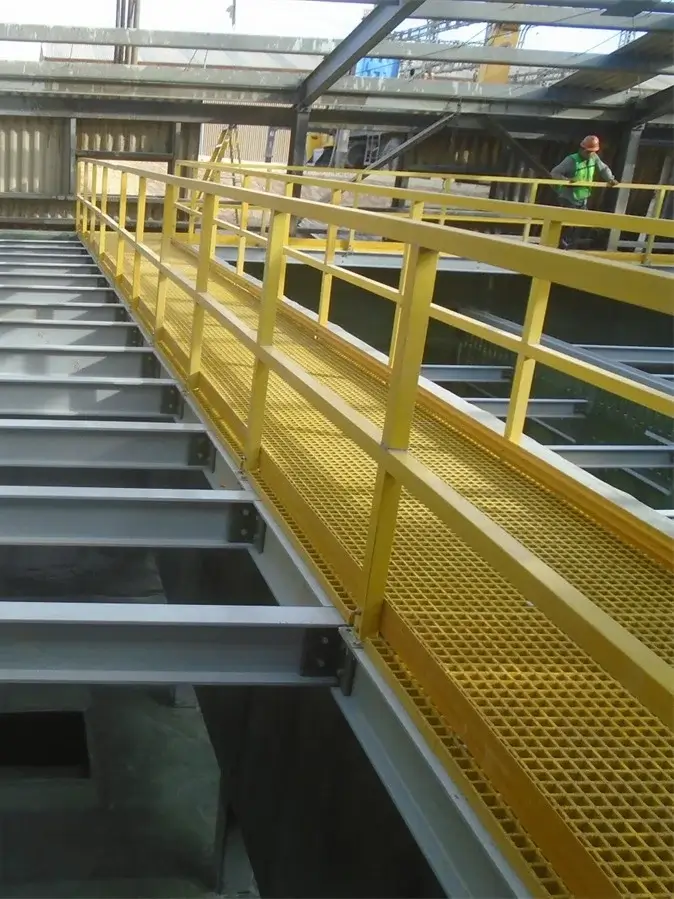
Fiberglass gratings and FRP profiles are an alternative to galvanized steel or aluminum in floors, walkways, drains, platforms and structures exposed to corrosion. Their non-slip surface, low weight and chemical resistance help reduce maintenance.
Searched products
- Molded or pultruded FRP gratings
- Pultruded FRP profiles
- FRP cable trays and plates
Industrial uses
- Corrosion-resistant floors and walkways
- Access and maintenance platforms
- Wet, chemical or saline areas
Common Applications for FRP Gratings and Profiles
FRP gratings and profiles are used in projects where corrosion, traffic, humidity, drainage or access safety are important factors. They are a practical solution to replace metal materials in industrial, chemical, hydraulic or infrastructure environments.
What are FRP grating and profiles used for?
- Springs.
- Floors.
- Platforms.
- Drains.
- Pools.
- Industrial walkways
- Wet or corrosive areas
- Industrial structures
Types of grating and profiles:
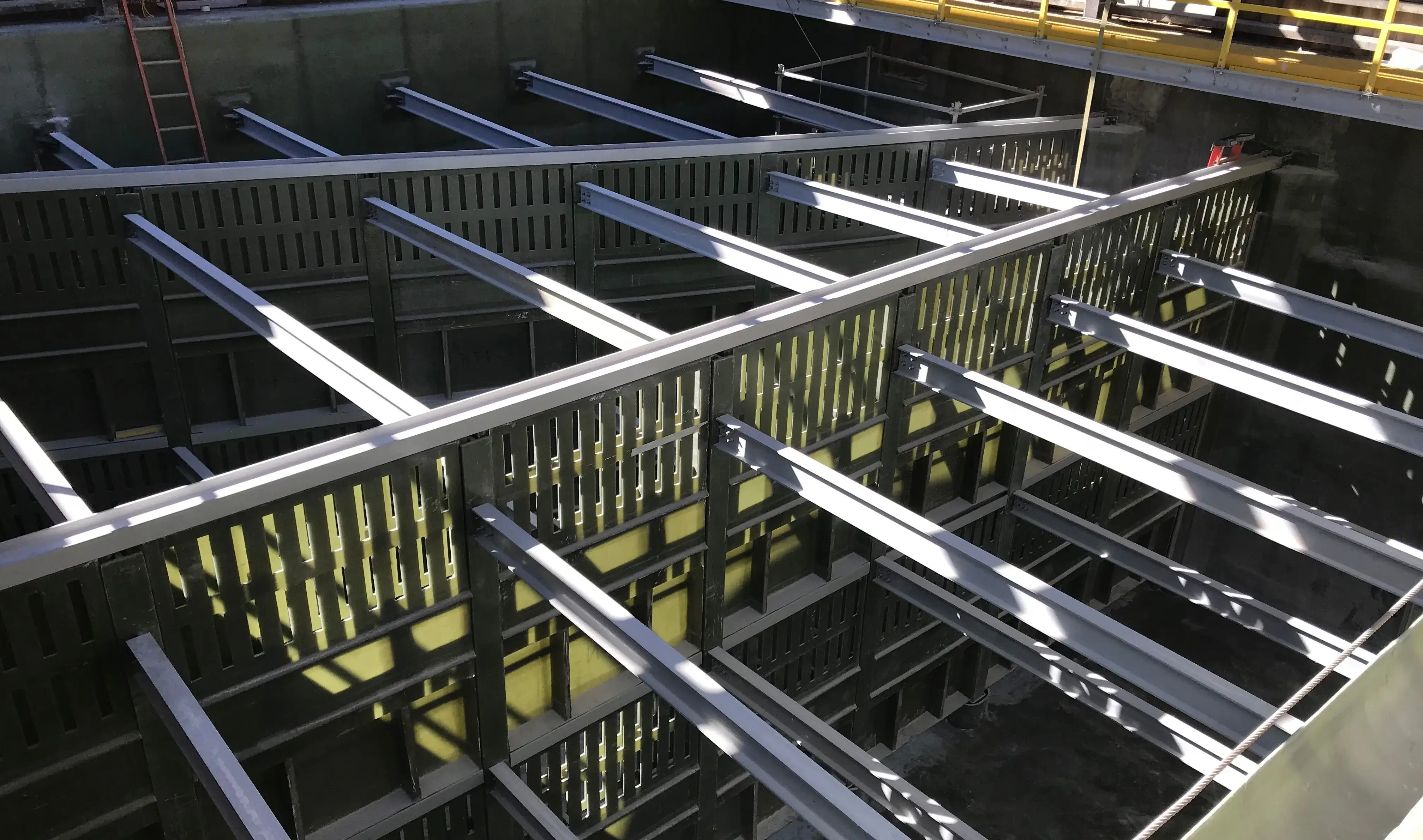
- Pultruded profiles, I-beam, H-beam, C-channel, angles, and rectangular tubes (PTR).
- FRP Gratings.
- FRP Plates.
- FRP Sheets.
- Electrical Trays.
Technical Advantages of FRP Gratings and Profiles
Our FRP products offer an exceptional combination of corrosion resistance, custom design, low maintenance, and long-lasting durability.
- Maximum corrosion resistance.
- Absence of interference with magnetic fields and radio frequencies.
- Thermal and electrical insulation, with flame retardant properties.
- Non-slip surface.
- Low maintenance cost and long service life.
- Impact resistance.
- Less thermal contraction and expansion than aluminum and steel.
Available Pultruded Profiles and FRP Components
Pultruded FRP profiles make it possible to build lightweight, resistant and stable structures for industrial applications. Depending on the project, they can be combined with gratings, plates, sheets and electrical trays to create complete systems.
Common Profiles
- I-Beam
- H-Beam
- C-Channel
- FRP angles
- Rectangular PTR tubes
Related Components
- FRP gratings
- FRP plates
- FRP sheets
- Electrical trays
- Platform components
Advantages Compared with Steel and Aluminum
In corrosive or humid areas, metal gratings and profiles may require painting, galvanizing, coatings or frequent maintenance. FRP solutions help reduce these issues and provide lower thermal contraction and expansion than aluminum and steel.
- Do not rust like metal materials
- Lower weight for easier handling and installation
- Non-slip surface for traffic areas
- Electrical and thermal insulation
- Do not interfere with magnetic fields or radio frequencies
- Lower maintenance and long service life
Related Products for FRP Systems
FRP gratings and profiles are often integrated with platforms, pipes, tanks and distribution systems to create corrosion-resistant industrial installations.
Useful Information to Quote FRP Gratings and Profiles
To properly evaluate an FRP grating, profile or component, it is important to understand the intended use, dimensions, loads, operating environment and installation conditions.
- Product type: grating, profile, plate or sheet
- Required dimensions
- Estimated load
- Use: floor, platform, drain or structure
- Corrosive or chemical environment
- Non-slip requirement
- Electrical or thermal conditions
- Project drawings or specifications
Product Gallery

Frequently Asked Questions About FRP Gratings and Profiles
They are used in floors, platforms, drains, pools, industrial structures, walkways, electrical trays and areas exposed to humidity, chemicals or corrosion.
They can include pultruded profiles such as I-beam, H-beam, C-channel, angles, rectangular PTR tubes, FRP gratings, plates, sheets and electrical trays.
They provide corrosion resistance, low maintenance, non-slip surface, lower weight, electrical and thermal insulation and long service life in aggressive environments.
No. One advantage of FRP products is that they do not interfere with magnetic fields or radio frequencies, which can be useful in specific industrial applications.
Typical information includes product type, dimensions, expected load, use case, operating environment, chemical exposure, surface type, drawings and project requirements.