
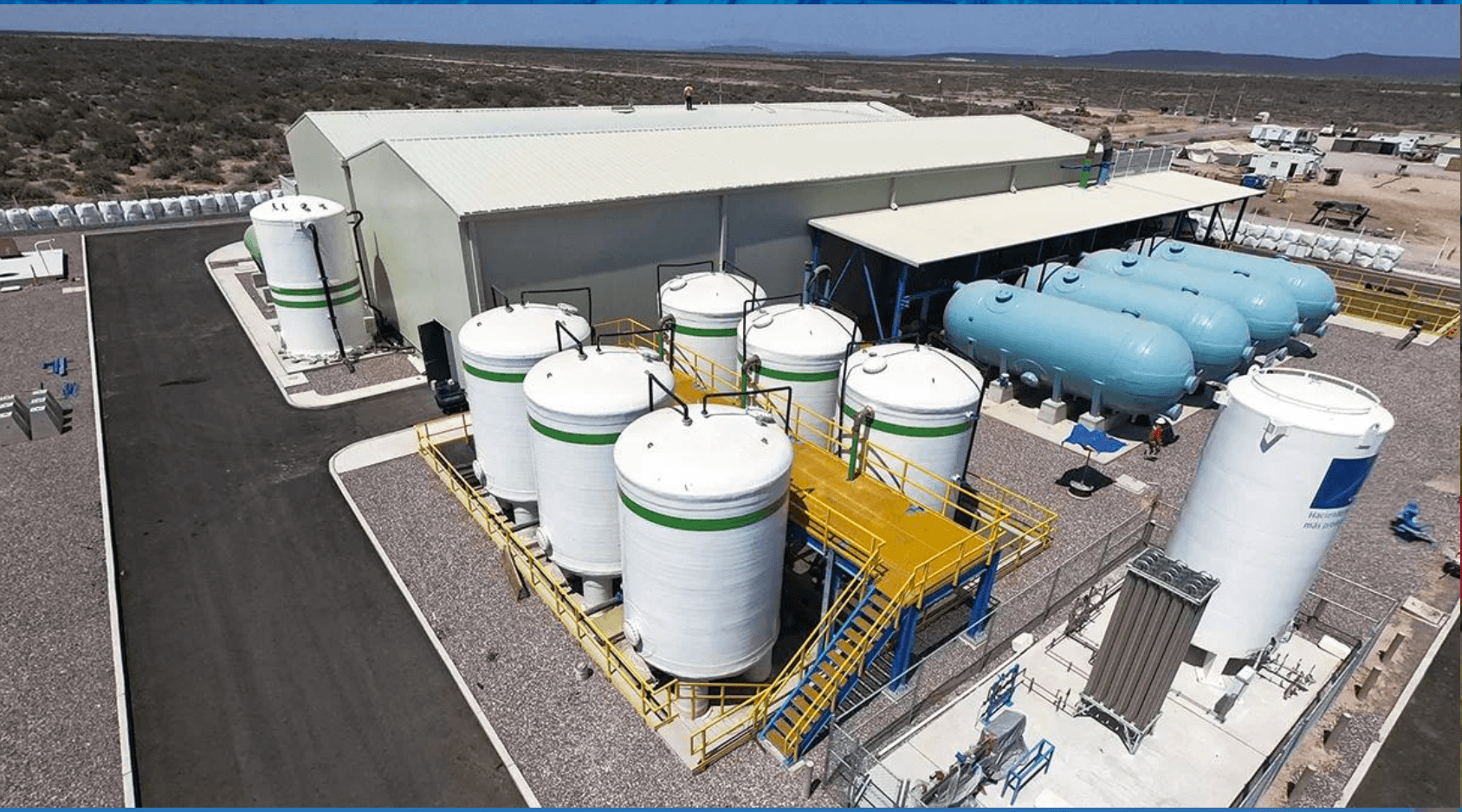
The Carbon Footprint of FRP: A Manufacturer's Life Cycle Perspective
Where the carbon in FRP equipment comes from, why service life dominates, and what data to request from any manufacturer when comparing FRP with metals.
The Carbon Footprint of FRP: A Manufacturer’s Life Cycle Perspective
Customers in mining, chemical processing, and water and wastewater increasingly ask us for the carbon footprint of the tanks, piping, and ducts we build. It is a reasonable question, and it deserves a more careful answer than a single figure. From the manufacturing floor, we can see which parts of the footprint belong to the factory and which parts are decided later by chemistry, temperature, and maintenance. This article explains how we look at it.
We will not claim that FRP always beats metal. What we can say is where the carbon in FRP equipment comes from, which design decisions reduce it, and what data you should ask any manufacturer to provide.
Where the carbon sits in an FRP tank
An FRP laminate is made of two main inputs: glass fiber reinforcement and a thermoset resin. Glass fiber requires melting glass, which is energy-intensive. Resins come from petrochemical feedstocks. Production of both happens before the material reaches our plant, so a large share of the cradle-to-gate footprint of a tank is set by the materials we buy, and the quantity of material we use is set by the design.
In our plant, the main controllable factors are material efficiency and scrap. A filament-wound tank built to ASTM D3299 deposits continuous glass at engineered angles, so the laminate can be designed for the load with little excess material. Contact-molded equipment built to ASTM D4097 gives us flexibility for large diameters, custom nozzle layouts, and non-standard shapes. In both cases, the design is documented in a laminate schedule, which means the actual material mass is known and can be reported.
Why service life dominates the result
Manufacturing emissions are incurred once. If a vessel has to be replaced earlier than planned, they are incurred again, together with demolition, transport, and plant downtime. In our experience, premature replacement is the single biggest driver of lifetime footprint for corrosion-resistant equipment, and it is almost always the result of a mismatch between resin and service.
That is why we start with the chemistry. We validate the resin system against the actual chemical, concentration, and temperature, using immersion data developed under ASTM C581. Where a liner or specific laminate material needs to be evaluated against a reagent, ASTM D543 provides the test practices. Standard vinyl ester FRP serves in continuous operation in the range of roughly 180–200°F (82–93°C). Above that, we do not simply thicken the wall: we change the construction, for example by applying a fluoropolymer liner, because a laminate that is attacked by the process fluid will not reach its design life regardless of its thickness.
Comparing FRP with metals on a fair basis
The comparison only makes sense when both options deliver the same duty for the same period. We recommend that customers define a functional unit, for example one tank for 25 years of a given service, and then add up the four stages:
- Materials and manufacturing: glass, resin, and fabrication energy for FRP; ore, smelting, and fabrication for metals. Exotic metal alloys are usually more energy-intensive to produce than carbon steel.
- Transport and installation: FRP equipment is lighter than a steel equivalent, which reduces freight and lifting requirements and may allow lighter foundations.
- Operation and maintenance: carbon steel in corrosive service requires linings or coatings and periodic renewal. Each cycle consumes materials and requires access and downtime.
- End of life: metals have established recycling routes. Thermoset FRP does not melt, and its routes are more limited.
When the process fluid is aggressive to metals and the temperature is within the resin range, FRP often comes out ahead because the lining or replacement cycles of the metal option dominate its footprint. When the service is beyond the resin limits, or the loads are concentrated and severe, another material may be the better choice, and we will say so during quoting.
Weight, handling, and secondary effects
Glass-reinforced laminates are considerably lighter than steel for the same envelope, and that has consequences beyond freight. Lighter vessels can often be set with smaller cranes and may need less foundation work, which saves materials and site time. These secondary effects rarely appear in a manufacturer's headline carbon figure, yet they belong in a project-level assessment. If your sustainability team is building a model, ask the engineering contractor to include foundation, lifting, and installation differences between the options, and ask us for the as-designed mass of each vessel so the inputs are real numbers and not estimates.
The same logic applies to spare parts and repairs: FRP can usually be repaired in the field with compatible laminate and resin, which avoids replacing a whole component when only a section is damaged.
End of life: what we tell customers
We prefer to be direct about this stage. Thermoset FRP is not recycled like steel. Routes that exist include size reduction for use as filler and co-processing in cement kilns, where the glass and mineral content replace raw material and the resin provides energy. Their availability depends on region and volume. The sustainability case for FRP is therefore built on the first three stages, above all on a long, maintenance-light service life, and not on recyclability.
What to ask any manufacturer
If your project has a sustainability requirement, these points make the answer verifiable:
- The complete service definition and the design life in years.
- The resin system and the evidence of its resistance to that chemistry, referencing ASTM C581 and, for liners, ASTM D543.
- The fabrication standard (ASTM D3299 or ASTM D4097) and the laminate schedule.
- The total as-designed mass of the equipment.
- Cradle-to-gate data for the specific materials, with assumptions and source stated.
- The inspection and maintenance plan for the full design life.
- The end-of-life options available in your region.
Applicable ASTM standards
- ASTM C581: chemical resistance of thermosetting resins in glass-fiber-reinforced structures for liquid service.
- ASTM D3299: filament-wound fiberglass-reinforced thermoset-resin corrosion-resistant tanks.
- ASTM D4097: contact-molded glass-fiber-reinforced thermoset resin corrosion-resistant tanks.
- ASTM D543: resistance of plastics to chemical reagents.
Our Experience
At Plastimarmol we have manufactured FRP exclusively for more than 40 years and have completed over 2,600 projects in mining, chemical processing, and water and wastewater. For more than 20 years we have also applied fluoropolymer liners in services that exceed the range of standard vinyl ester. In every one of those projects, the equipment that reaches its design life is the equipment whose resin, laminate, and liner were chosen against the real process conditions before fabrication started.
Final Thoughts
The carbon footprint of an FRP tank is not a catalog number. It depends on the duty, the design life, the construction standard, and the match between resin and chemistry. If you are preparing a project with sustainability criteria, send Plastimarmol your service conditions and datasheets. We will help you define the equipment, document it against ASTM C581, D3299, D4097, and D543, and provide the mass and laminate data your team needs.
References
ASTM International. (2022). Standard practice for determining chemical resistance of thermosetting resins used in glass-fiber-reinforced structures intended for liquid service (ASTM C581-22). ASTM International.
ASTM International. (2023). Standard specification for filament-wound fiberglass-reinforced thermoset-resin corrosion-resistant tanks (ASTM D3299-16(2023)). ASTM International.
ASTM International. (2022). Standard specification for contact-molded glass-fiber-reinforced thermoset resin corrosion-resistant tanks (ASTM D4097-17(2022)). ASTM International.
ASTM International. (2021). Standard practices for evaluating the resistance of plastics to chemical reagents (ASTM D543-21). ASTM International.